
Yanaka District Tokyo: Explore the Soul of Old Japan
Top Questions
Table of Contents
- What is Yanaka District and Why is it Special?
- Yanaka Ginza: The Heart of Traditional Tokyo
- Street Food Heaven: The Delights of Yanaka
- Yanaka Cemetery: Hauntingly Beautiful
- Nezu Shrine: A Kyoto-like Experience in Tokyo
- Hidden Gems and Local Experiences
- Seven Lucky Cats: A Treasure Hunt
- Best Time to Visit Yanaka District
- How to Reach Yanaka District
- Perfect Half-Day Itinerary
- Where to Stay Near Yanaka
- Practical Tips & Important Information
- Combining Yanaka With Other Areas
- What Makes Yanaka Different from Shibuya or Other Tokyo Areas?
- Local Culture & Community Spirit
- Food Beyond Street Snacks
- Cat Town: Why So Many Cats?
- Sustainability & Preservation Efforts
- Beyond the Tourist Trail: Secret Spots
- Weather & What to Wear
- Money Matters
- Final Thoughts: Why Yanaka Should Be On Your Tokyo Itinerary
- Useful Resources & Links
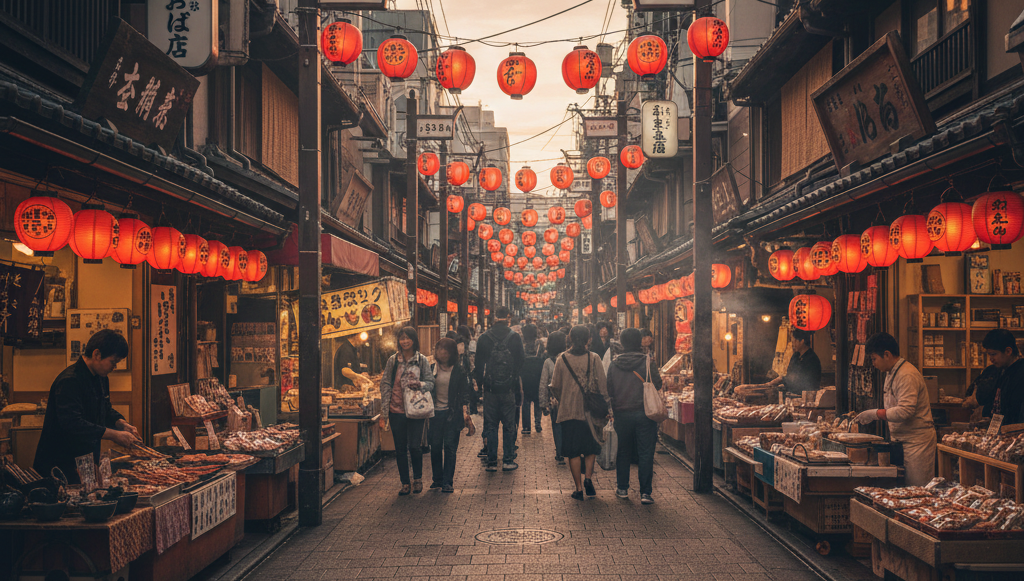
When people talk about Tokyo, the first things that come to mind are the bustling crowds of Shibuya, the glittering skyscrapers of Shinjuku, and the luxury stores of Ginza. But if you want an authentic Japanese cultural experience, you need to visit Yanaka District. This is where the heart of old Tokyo still beats strong.
When I first visited Yanaka, I felt like I'd stepped into a time machine and traveled back 50-60 years. In fact, this is the part of Tokyo that survived World War II bombing, which is why you can still see the authentic look of the Showa era (1926-1989) here.
What is Yanaka District and Why is it Special?
Yanaka is a neighborhood located in Tokyo's Taito ward, and it's part of the "Yanesen" area - a combination of Yanaka, Nezu, and Sendagi. The name literally means "in the valley" (谷中) because this area is situated between several hills.
What makes Yanaka truly special is its "shitamachi" atmosphere - reminiscent of old downtown Tokyo. When the Great Kanto Earthquake struck in 1923 and World War II bombings followed, most of Tokyo was destroyed. But Yanaka was fortunately spared, and today it stands as a living museum where you can see what Tokyo used to be like.
Here you'll find over 70 Buddhist temples, traditional wooden houses, narrow alleyways, and a 170-meter shopping street that evokes the Showa period. This area is famous for its peaceful vibe, stray cats, and local artisans.
Yanaka Ginza: The Heart of Traditional Tokyo
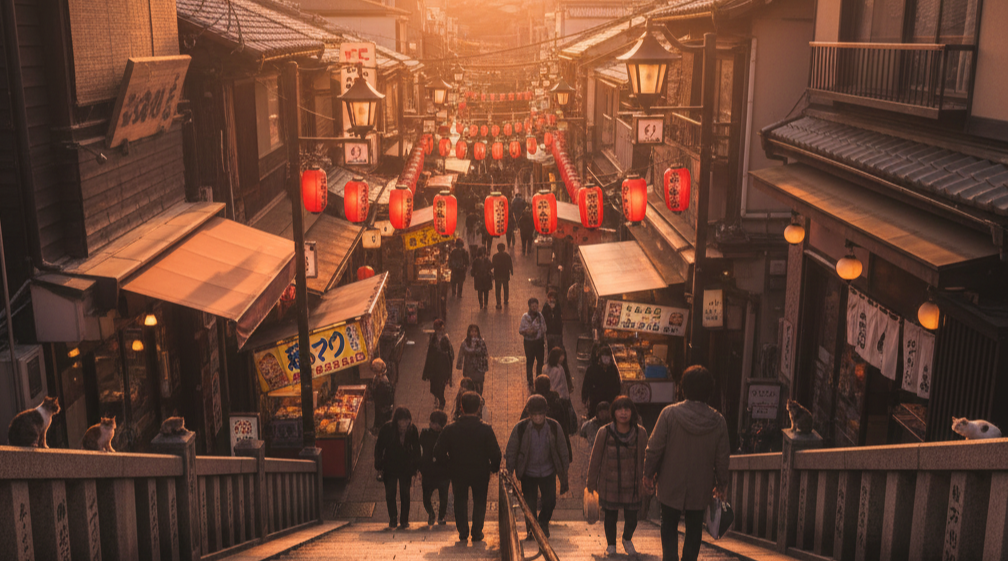
Yuyake Dandan - The Sunset Stairs
The Yanaka journey begins at Yuyake Dandan - a staircase that descends from Nippori Station to Yanaka Ginza shopping street below. "Yuyake Dandan" means "Sunset Steps," and this name is perfect because the view at sunset from here is absolutely breathtaking.
In the 1990s, local residents chose this name through a public poll, and now it has become an iconic Yanaka landmark. For photographers and Instagram enthusiasts, this is a must-visit spot. Mount Fuji used to be visible from here, but now skyscrapers have blocked that view.
I personally recommend visiting in the late afternoon when the sunlight turns golden. At that time, the view of the shopping street from the top of the staircase looks absolutely magical.
Shopping Street Experience
Yanaka Ginza is approximately a 170-meter pedestrian shopping street with about 60+ independent shops. You'll find everything here - from groceries to traditional handicrafts, from clothes to sweets.
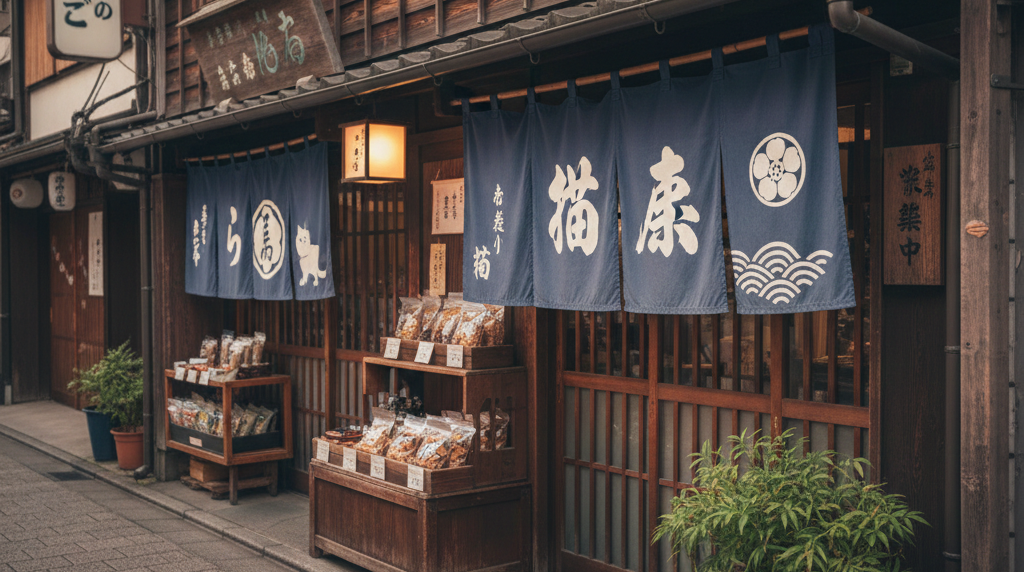
What I loved most was that the shops here are multi-generational family businesses. There's one shop that's been making rice crackers for over 100 years, another that's been making lollipops since 1913! This continuity, this tradition - it's rare in modern Tokyo.
Shopping street timings:
Most shops are open from 10 AM to 6-7 PM
Many shops are closed on Monday or Wednesday
If Monday is a public holiday, shops will be closed on Tuesday
Weekends see larger crowds
Street Food Heaven: The Delights of Yanaka
If you're a foodie, Yanaka is paradise. The street food scene here is outstanding, and the best part - it's made for locals, not tourists. That's why prices are reasonable and the taste is authentic.
Must-Try Street Foods:
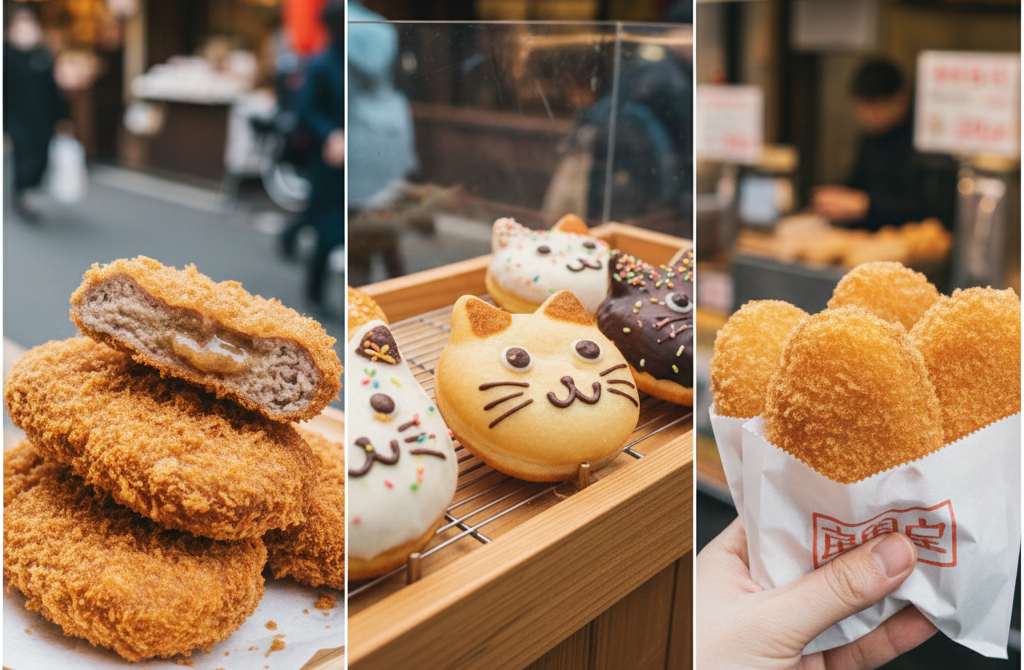
1. Menchi-Katsu (Niku no Suzuki) This is Yanaka's most famous street food. At Niku no Suzuki, they mix ground beef and onions and deep-fry them in a crispy breadcrumb coating. This shop changes its oil three times a day to ensure every menchi-katsu is crispy and fresh. Price is only 200-300 yen, and the taste? Incredible!
When I first tried it, I thought this was Tokyo's most underrated dish. Crispy outside, juicy inside - perfect!
2. Cat Tail Donuts (Yanaka Shippoya) Yanaka is famous as "Cat Town," and the cat-themed treats here are absolutely unique. At Shippoya, you'll find donuts shaped like cat tails that are so cute you won't want to eat them! There are 13 different flavors, including tiger-patterned ones. Price is 100-140 yen per donut.
3. Korokke (Japanese Croquettes) Available at multiple shops. Potato and meat mixed together, coated in breadcrumbs and fried. Cheese and curry flavors are especially popular. One piece costs just 100 yen!
4. Ikayaki (Grilled Squid) If you like squid, definitely visit Ikayaki Yakiya. Fresh squid is grilled and served with different sauces. This is traditional festival food that's available here year-round.
5. Traditional Sweets
Yanaka Senbei - 100+ year-old rice cracker shop
Honey lollipops - handmade recipe from 1913
Taiyaki - fish-shaped cakes with red bean filling
Manju - steamed buns with sweet fillings
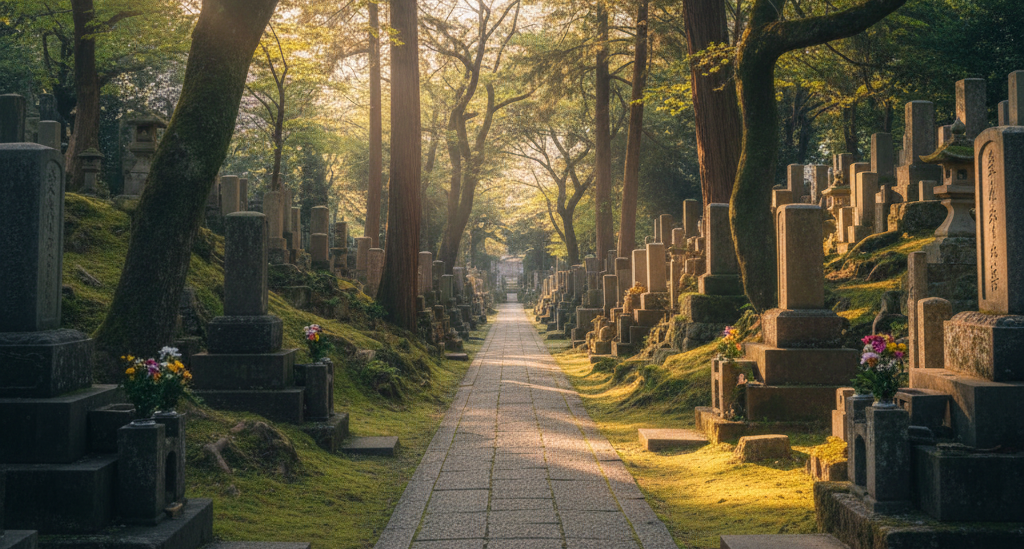
Yanaka Cemetery: Hauntingly Beautiful
When I first heard that a cemetery was among Yanaka's highlights, I found it a bit strange. But when I visited, I understood why it's so special.
Yanaka Cemetery spans 10 hectares (approximately 100,000 square meters) and contains over 7,000 graves. It was established in 1874 and is one of Tokyo's oldest and largest cemeteries.
Why Visit a Cemetery?
1. Cherry Blossom Season (Late March - Early April) The main road running through the cemetery is called "Sakura-dori" (Cherry Blossom Street). There are 170+ cherry trees here that bloom fully in spring. The combination of pink flowers and traditional gravestones creates a surreal and beautiful scene.
Unlike other famous hanami spots, picnics aren't allowed here (because it's a cemetery), so the crowds are somewhat controlled and the atmosphere remains peaceful.
2. Historical Significance Many famous personalities are buried here, including:
Tokugawa Yoshinobu - Japan's last shogun (died 1913)
Famous artists, writers, and political figures from the Meiji era
3. Peaceful Nature Walk It feels like a proper park with:
Wide, well-maintained paths
Mature trees and lush greenery
Quiet atmosphere - perfect for reflection
Views of Tokyo Skytree from certain points
4. The Famous Stray Cats Yanaka is famous for its cats, and you'll usually find several cats in the cemetery - though during cherry blossom season they're less visible due to crowds. Your chances are better on morning walks.
Nezu Shrine: A Kyoto-like Experience in Tokyo
If you love the vermillion torii gates of Kyoto's Fushimi Inari Shrine but don't have time to visit Kyoto, Nezu Shrine is perfect for you.
History and Significance
Nezu Shrine has a history spanning over 1,900 years. According to legend, priest Yamato Takeru no Mikoto established this shrine. The current buildings were constructed in 1706 by the fifth shogun of the Edo period, Tokugawa Tsunayoshi, and miraculously survived World War II.
It's one of the Tokyo Jissha - meaning one of Tokyo's 10 most important Shinto shrines. All seven main buildings and gates are designated as Important Cultural Properties of Japan.
Main Attractions:
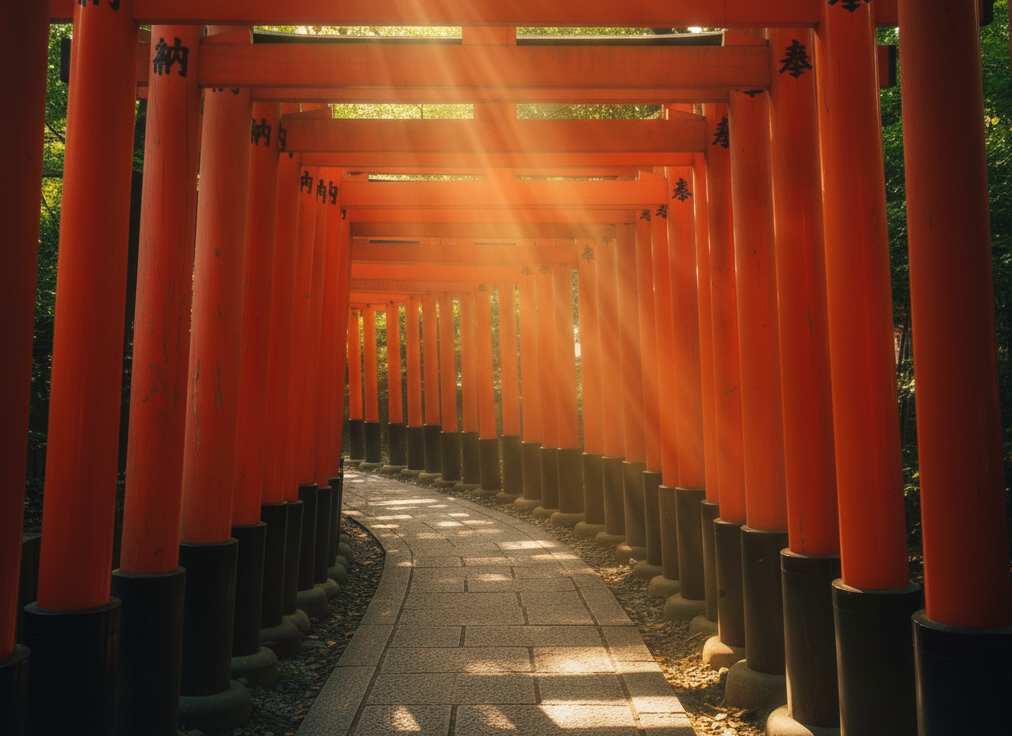
1. Senbon Torii (Thousand Torii Gates) There's a winding tunnel of bright vermillion colored torii gates that climbs up a hillside to Otome Inari Shrine. This gives you a Kyoto Fushimi Inari-like experience, though on a smaller scale. In late afternoon when sunlight filters through the trees, the scene becomes magical.
Pro tip: Walking from north to south is considered auspicious as it purifies negative energies.
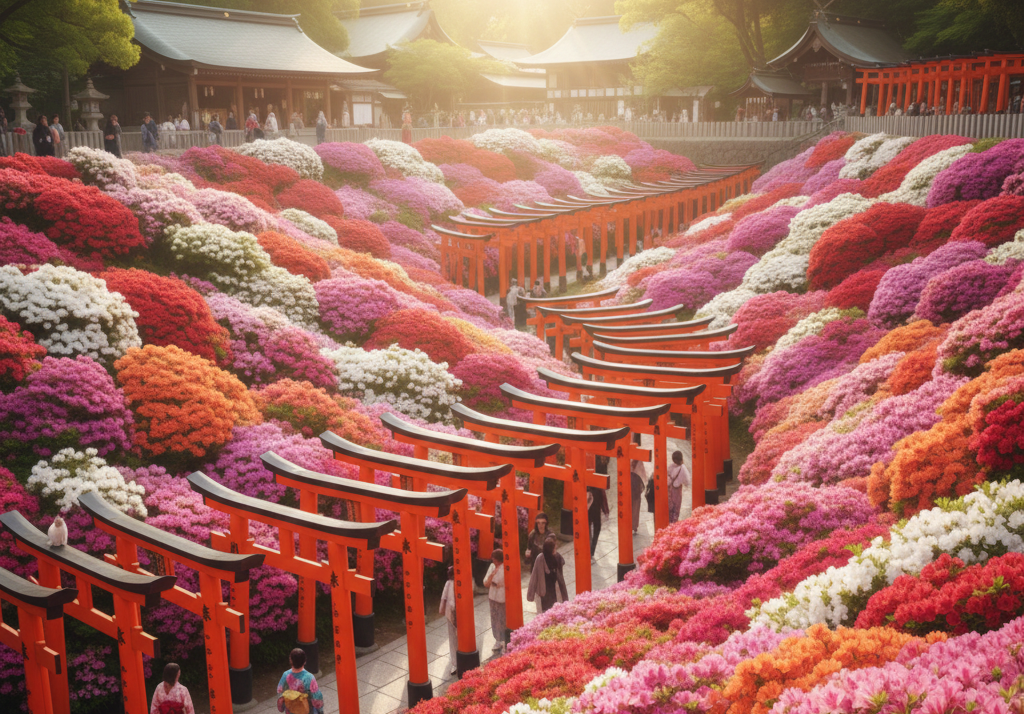
2. Azalea Festival (Bunkyo Azalea Matsuri) From early April to early May, the shrine grounds transform when 3,000+ azalea bushes bloom. Pink, red, purple, white - an explosion of colors in 100+ varieties!
Entry fee to the garden during the festival is 500 yen, but totally worth it. There are also traditional dance performances, food stalls, and craft exhibitions.
3. Architectural Beauty The shrine buildings are in the gongen-zukuri style - a unique architectural style that blends Shinto and Buddhist elements. Vibrant vermillion paint, intricate gold trim, and detailed carvings of mythical creatures - every detail is amazing.
The Romon tower gate is especially impressive - it's the only remaining two-story gate from the Edo period still standing in Tokyo. Over 320 years old!
4. Koi Pond and Gardens Serene ponds with colorful koi fish, and reflections of shrine buildings in the water create beautiful scenes that change with the seasons.
Hidden Gems and Local Experiences
1. Tennoji Temple
Yanaka's oldest temple (established in 1274). Large bronze Buddha statue, beautiful garden, and peaceful atmosphere. It's near the cemetery so you can easily visit both.
2. SCAI The Bathhouse
A unique art gallery created by converting a 200-year-old public bathhouse. Contemporary art exhibitions are held here.
3. Asakura Museum of Sculpture
The home and studio of famous 20th-century sculptor Fumio Asakura. The building architecture itself is quite impressive, and from the first floor you can see both Yanaka's old buildings and the modern Tokyo skyline together.
4. Ueno Sakuragi Atari
Three old Japanese houses (from 1938) renovated into modern spaces:
Yanaka Beer Hall - craft beer and traditional atmosphere
Vaner - excellent bakery
Various community spaces and workshops
This complex is a perfect example of how Yanaka preserves old buildings while giving them new uses.
5. Kayaba Coffee
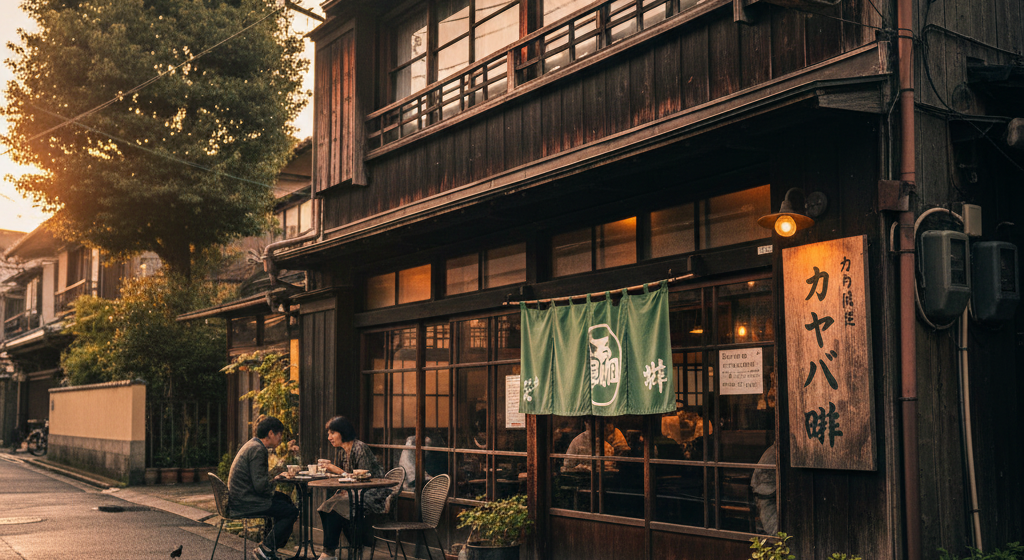
Operating since 1938 (with a brief closure). Traditional wooden building, Showa-era decor, and famous egg sandwich. The local community helped reopen it in 2009. A classic meeting spot for writers and artists.
Seven Lucky Cats: A Treasure Hunt
In Yanaka Ginza, there's a fun activity - finding the Seven Lucky Cats. These are wooden carved cat statues hidden in different corners of the shopping street - on rooftops, at shop fronts. According to legend, if you find all seven, you'll receive good luck!
The best time is early morning when crowds are minimal, so you can search comfortably.
Best Time to Visit Yanaka District
Season-wise Guide:
Spring (Late March - Early April): Best Time! ★★★★★
Cherry blossoms at Yanaka Cemetery (peak bloom)
Azalea Festival at Nezu Shrine (from early April onwards)
Pleasant weather for walking
Slightly larger crowds but worth it
Summer (June - August): ★★★☆☆
Lush green scenery
Himitsudo's famous kakigori (shaved ice) perfect for hot days
Can be quite humid
Yanaka Matsuri festival in August
Autumn (September - November): ★★★★★
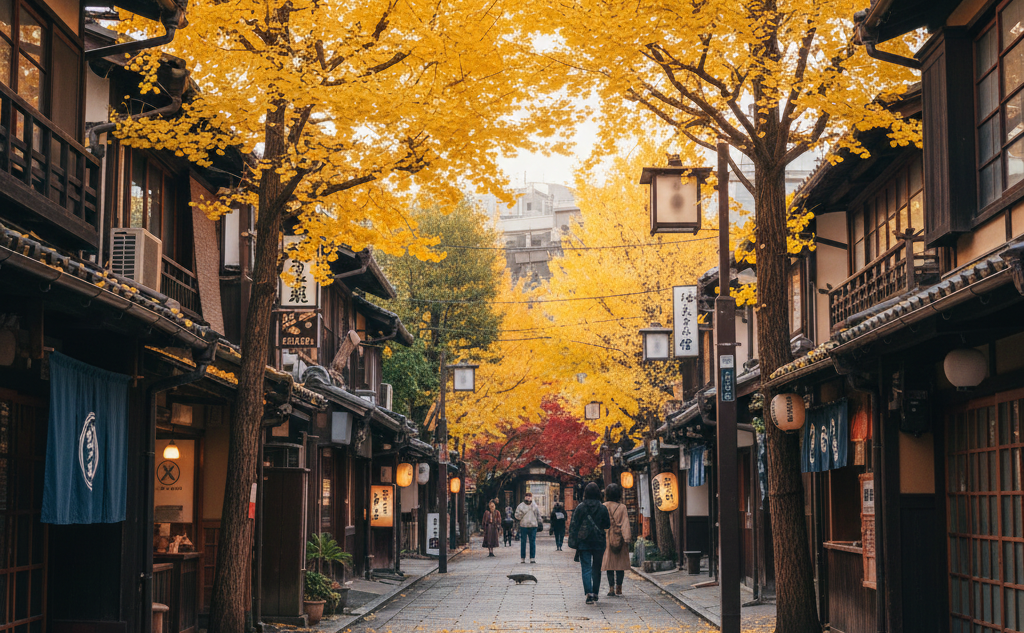
Beautiful fall foliage - especially ginkgo trees at Nezu Shrine
Comfortable temperatures for walking
Fewer crowds than spring
Perfect for photography
Winter (December - February): ★★★☆☆
Peaceful and quiet atmosphere
Fewer tourists
Cold weather - warm clothes essential
Many outdoor activities limited
Time of Day:
Early Morning (7-9 AM):
Perfect for photography at Yuyake Dandan
Nezu Shrine torii gates without crowds
Spot cats in cemetery
See locals going about daily routines
Late Morning/Noon (10 AM - 2 PM):
Shops open
Best time for street food
Temple visits
Busiest period
Late Afternoon/Evening (4-7 PM):
Sunset from Yuyake Dandan - best views!
Golden hour photography
Echigoya Honten (standing bar) evening drinks
Shops start closing around 6-7 PM
How to Reach Yanaka District
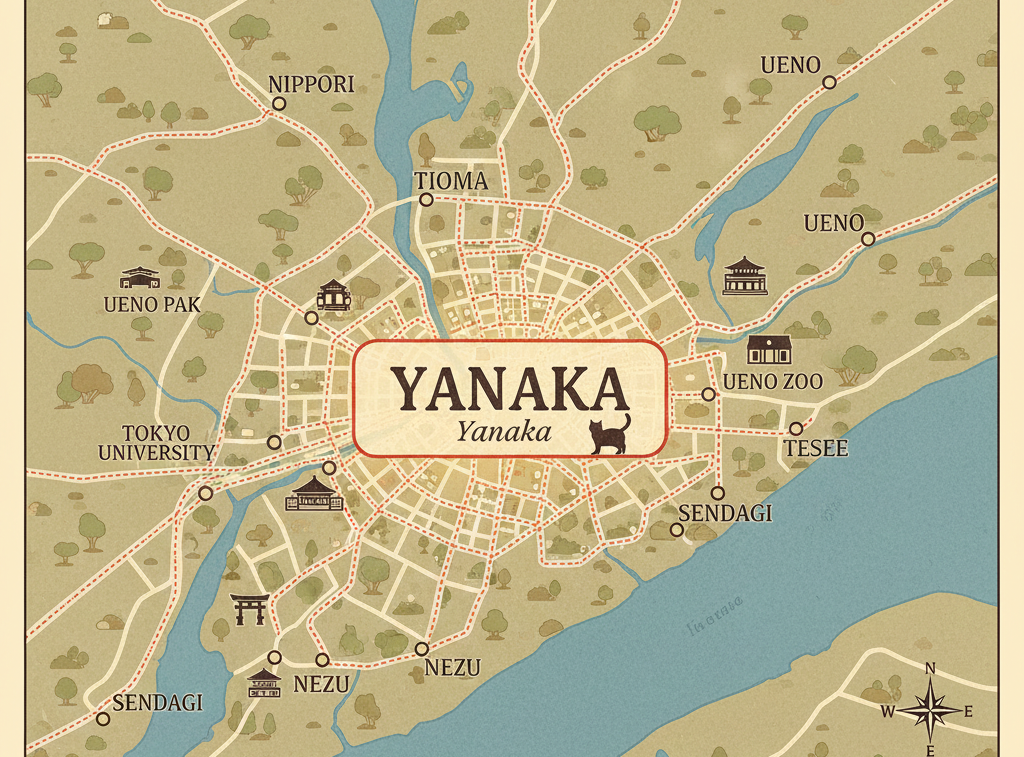
From Major Tokyo Stations:
From Tokyo Station:
JR Yamanote Line to Nippori Station (12 minutes)
5-minute walk to Yanaka Ginza
From Shinjuku:
JR Yamanote Line to Nippori Station (20 minutes)
Direct route, easy navigation
From Shibuya:
JR Yamanote Line to Nippori Station (25 minutes)
No transfers needed
Nearest Stations:
1. Nippori Station (Main Entry Point)
JR Yamanote Line
JR Keihin-Tohoku Line
JR Joban Line
Keisei Line
5-minute walk to Yuyake Dandan
2. Sendagi Station
Tokyo Metro Chiyoda Line
7-minute walk to Yanaka Ginza
3. Nezu Station
Tokyo Metro Chiyoda Line
Best for starting at Nezu Shrine
5-minute walk to shrine
From Airports:
Narita Airport:
Keisei Skyliner to Nippori Station (36 minutes)
Perfect for travelers with luggage
Haneda Airport:
Tokyo Monorail to Hamamatsucho, transfer to Yamanote Line (55 minutes)
Perfect Half-Day Itinerary
Total Time: 5 hours
9:00 AM - Start at Nezu Station Walk to Nezu Shrine, explore torii gates and main buildings (1 hour)
10:00 AM - Walk to Yanaka Stroll through backstreets, discover temples (30 minutes)
10:30 AM - Yanaka Cemetery Cherry blossoms (if spring) or peaceful walk (45 minutes)
11:15 AM - Arrive at Yanaka Ginza Street food tasting - menchi-katsu, cat donuts (30 minutes)
11:45 AM - Shopping & Exploring Browse traditional shops, handicrafts, souvenirs (1 hour)
12:45 PM - Lunch Break Kayaba Coffee for egg sandwich or local restaurant (45 minutes)
1:30 PM - More Exploration Ueno Sakuragi Atari, Allan West's studio (if open), temples (1 hour)
2:30 PM - Sunset Prep Find good spot at Yuyake Dandan for sunset (30 minutes)
Where to Stay Near Yanaka
Budget Options:
Sakura Hotel Nippori - €50/night Basic but clean, perfect location
Hanare Guesthouse - €150-250/night Traditional atmosphere with shared bathrooms
Mid-Range:
APA Hotel TKP Nippori Ekimae - €90/night Modern, convenient location right at station
Luxury:
YANAKA SOW - €250-350/night Sleek modern design, boutique experience
Almont Hotel Nippori Komeiseki Onsen facility included!
Practical Tips & Important Information
Do's:
✓ Wear comfortable walking shoes - lots of walking on narrow streets ✓ Bring cash - many small shops don't accept cards ✓ Arrive early to avoid crowds at popular spots ✓ Try multiple street foods - they're cheap! ✓ Respect the cemetery - it's an active burial ground ✓ Be respectful at temples and shrines
Don'ts:
✗ Don't picnic in Yanaka Cemetery ✗ Don't disturb the cats - let them approach you ✗ Don't rush - Yanaka is meant to be explored slowly ✗ Don't visit only on Monday/Tuesday - many shops closed ✗ Don't expect English everywhere - part of the authentic charm
Photography Tips:
📸 Golden hour (late afternoon) is magical 📸 Yuyake Dandan best at sunset 📸 Early morning for empty streets 📸 Nezu Shrine torii gates - use wide angle lens 📸 Cherry blossom season - arrive early to avoid crowds
Combining Yanaka With Other Areas
Ueno Park (25-minute walk)
Tokyo National Museum
Ueno Zoo
Multiple temples
[Internal Link: Tokyo travel guide]
Asakusa (30 minutes by train)
Sensoji Temple
Nakamise Shopping Street
Traditional crafts
Akihabara (10 minutes from Nippori)
Electronics and anime culture
Complete contrast to Yanaka's traditional vibe
What Makes Yanaka Different from Shibuya or Other Tokyo Areas?
If you've experienced the energy and modernity of Shibuya, Yanaka is a completely different experience:
Pace of Life: Shibuya is hustle and bustle, Yanaka is slow and peaceful Architecture: Modern skyscrapers vs traditional wooden houses Crowds: Masses of tourists vs local residents and discerning travelers Shopping: Corporate brands vs family-run shops Food: International chains vs authentic local eateries Atmosphere: Neon lights vs lantern-lit streets
Both are perfect in their own way, but Yanaka shows the side that most tourists miss.
Local Culture & Community Spirit
The most beautiful thing about Yanaka is its community. The people here are proud of their neighborhood and play an active role in preserving tradition.
Groups like the Taito Cultural & Historical Society have saved many traditional buildings from demolition and renovated them for new tenants. This balance - preserving the old while welcoming the new - is the soul of Yanaka.
Local shop owners are mostly friendly, and if you speak a little Japanese, they're always ready for conversation. This personal connection is rare in modern Tokyo.
Food Beyond Street Snacks
Beyond street food, Yanaka has excellent proper dining options:
Tofu Room Dy's - Famous for tofu sandwich Azegami - Handmade soba noodles (700 yen per bowl) Kawazu - Traditional Japanese dinner (excellent reviews) Himitsudo - Legendary kakigori (shaved ice) with 132 secret toppings Yanaka Beer Hall - Craft beer in restored traditional house
Cat Town: Why So Many Cats?
Yanaka is famous as "Cat Town." Historically, there was a tradition of cats around Buddhist temples (to protect scriptures from mice). Over time, the stray cat population grew.
Today, local residents take care of the cats, and many shops sell cat-related merchandise, with a portion used to feed the cats. This community effort to protect cats is remarkable.
You're more likely to find cats in the cemetery and backstreets, especially on morning walks.
Sustainability & Preservation Efforts
Yanaka is a living example of sustainable urban development. Instead of a demolish-and-rebuild approach, a preserve-and-adapt approach is used here.
Old buildings are retrofitted for modern use while maintaining their historical character. This approach:
Preserves cultural heritage
Maintains community identity
Is environmentally sustainable
Generates economic activity
While other areas of Tokyo are losing their identity in the name of development, Yanaka has proven that progress and preservation can go hand in hand.
Beyond the Tourist Trail: Secret Spots
Hatsune Alley
Narrow alley with small bars and izakayas. The night scene is interesting - enjoying drinks among locals is a unique experience.
Writer's Stone (Bungo no Ishi)
On Nezu Shrine grounds, a large flat stone where famous writers Soseki Natsume and Ogai Mori used to sit and write.
Mikado Crossing
Triangular crossing with a giant Himalayan cedar tree. The local community saved this tree from being cut down. It's been featured in Japanese TV dramas.
Temple Hopping
117 temples in the Yanesen area, 76 just in Yanaka. Most are small but charming, with well-kept gardens. Jomyoin Temple has 25,000+ Jizo statues (guardian of children) - quite a sight!
Weather & What to Wear
Spring: Light jacket, comfortable shoes, sunscreen Summer: Light clothing, hat, water bottle, hand towel (humidity!) Autumn: Layers - morning/evening cool, afternoon warm Winter: Warm coat, gloves, scarf, comfortable boots
Walking shoes are essential in every season - you'll need to do a lot of walking to explore this area.
Money Matters
Budget Estimate for Half-Day:
Transport: ¥500-800
Street food: ¥1,000-2,000
Sit-down meal: ¥1,000-2,000
Shopping/Souvenirs: ¥2,000-5,000
Nezu Shrine azalea garden (seasonal): ¥500 Total: ¥5,000-10,000 (approximately $35-70)
Most small shops are cash-only, so withdrawing cash from an ATM beforehand is recommended.
Final Thoughts: Why Yanaka Should Be On Your Tokyo Itinerary
When I talk to people about Tokyo, everyone mentions Shibuya Crossing, Tokyo Tower, and Sensoji Temple. These are all amazing, no doubt. But if you want the real Tokyo experience - the daily life of locals, where traditions are still alive, where the pace of life is a bit slower - then Yanaka is essential.
Here you'll find the Tokyo that's not trending on Instagram, that's not on the front page of travel brochures. But this is the Tokyo that Japanese people themselves appreciate. This is the Tokyo where you can talk to a 100-year-old shop owner who's using his grandfather's recipe. This is the Tokyo where cats roam freely on the streets and no one disturbs them.
For me personally, Yanaka is the place I return to on every trip. Because every time I discover something new - a small temple, a hidden café, an artisan's workshop. This area never gets boring.
So if you're planning a Tokyo trip, please set aside a half-day for Yanaka. Start at Nezu Shrine in the morning, pass through Yanaka Cemetery, eat street food at Yanaka Ginza, and watch the sunset from Yuyake Dandan in the evening. Trust me, this will be an experience you'll always remember - a small time capsule in the midst of modern Tokyo where the past is still alive.
Useful Resources & Links
Official Tourism Sites:
Go Tokyo - Yanaka & Nezu - Official Tokyo tourism guide
Japan Guide - Yanaka - Comprehensive travel information
Tokyo Cheapo - Yanaka - Budget-friendly tips
Booking & Tours:
Book guided Yanaka walking tours to learn history from locals
Related Reads:
Hunza Valley Travel Guide - Another hidden gem destination
Shibuya District Guide - Compare modern Tokyo
Tokyo Comprehensive Guide - Full city overview
Asia Travel Blog - More Asian destinations
Transportation:
Hyperdia - Train route planner
Japan Transit Planner - Alternative route finder
Yanaka District is not just a tourist spot - it's an experience, a feeling, a journey into the heart of Tokyo. When modern city life becomes overwhelming, Yanaka is a place of peace where time moves a bit slower, where tradition is still valued, and where you discover a new chapter of history at every corner.
Image Gallery